


%402x.svg)
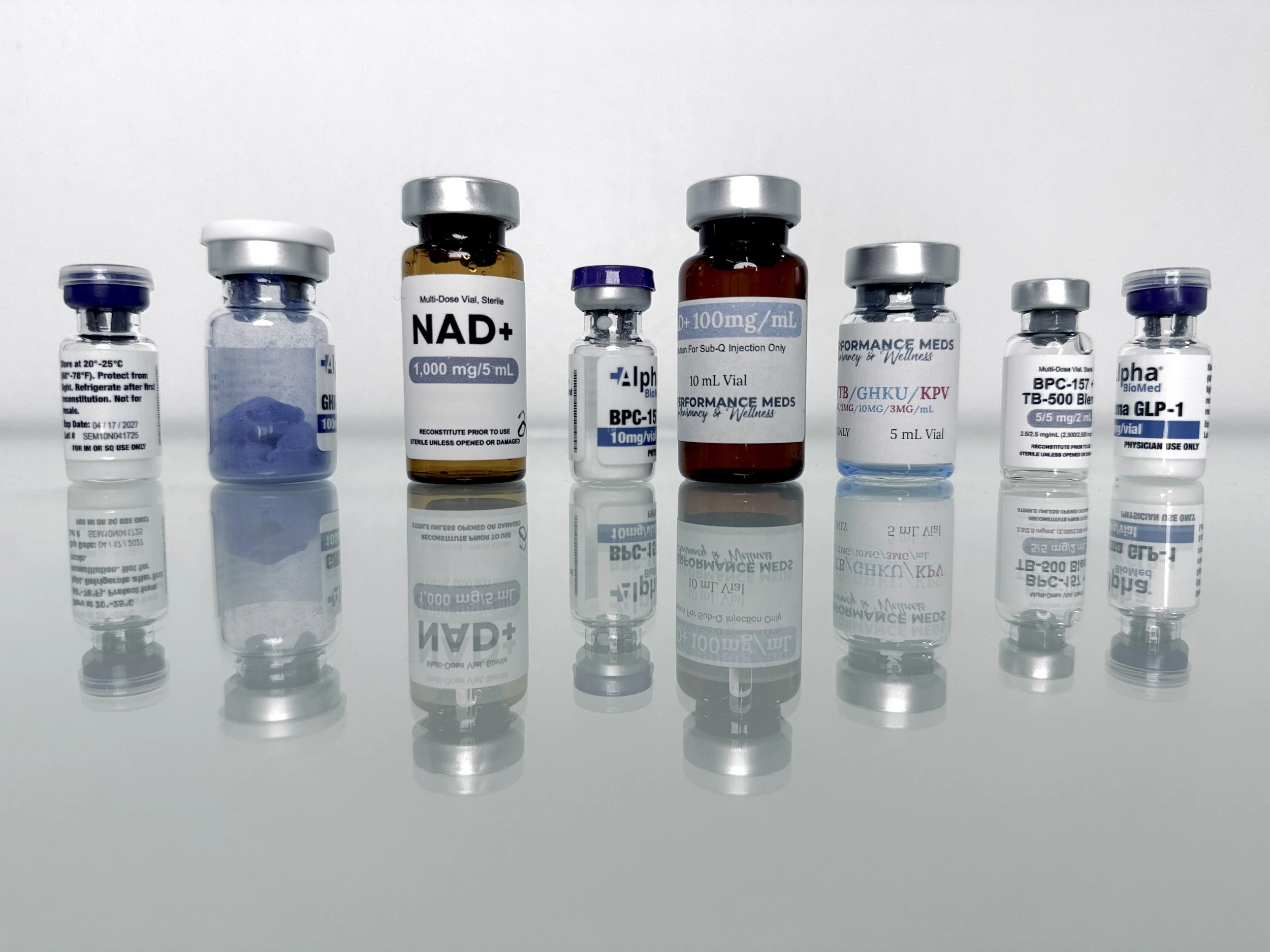
If you've spent any time on social media or listened to a fitness podcast lately, you've probably heard about peptides like BPC-157 or TB-500 promising faster healing from injuries. We've started getting more questions about them at AZPI, so we wanted to break down what the research actually shows, and where physical therapy still fits into the picture.
Peptides are short chains of amino acids that act as signaling molecules in the body, telling tissues to repair, regulating inflammation, and coordinating other biological processes. They're not new (insulin is technically a peptide), but interest in using them for injury recovery and anti-aging has exploded over the past year, driven largely by athlete and influencer endorsements.
The buzz got another boost this spring: in April 2026, the FDA removed twelve peptide compounds, including several popular recovery peptides, from a restricted compounding category. That move doesn't mean these peptides are FDA-approved for treating injuries. It means they're now eligible for a more structured scientific review process that will play out over the next year or so.
BPC-157 is the most studied of the recovery-focused peptides, so it's a good case study for where the science currently stands.
A 2025 systematic review in the Orthopaedic Journal of Sports Medicine looked at 36 studies on BPC-157 published between 1993 and 2024. The reviewers found consistent evidence that the peptide helps tissue repair in animal models by boosting growth factors and reducing inflammation, with improved outcomes across muscle, tendon, ligament, and bone injury models. But when it came to actual human evidence, the review turned up just one small clinical study: 7 out of 12 patients with chronic knee pain reported relief lasting more than six months after a single BPC-157 knee injection. The same review noted there's currently no clinical safety data on BPC-157 in humans, even though animal studies haven't shown harmful effects.
A separate narrative review in a 2025 orthopaedic tissue-regeneration journal echoed the same pattern after examining 28 published articles on peptide therapies for tendon and ligament injuries: promising cellular and biomechanical results in animal models, but a near-total lack of controlled human trials, which makes it hard to say much about real-world safety or effectiveness.
Put simply: the lab and animal research on peptides like BPC-157 is genuinely interesting, and it's part of why so many researchers and clinicians are paying attention. But we're not yet at the point where there's solid, controlled human evidence to say how well these compounds work, at what dose, or how safe they are over time. BPC-157 also isn't FDA-approved for any human use, and it's currently prohibited in several competitive sports.
Here's what hasn't changed, regardless of what happens with peptide research over the next few years: the tissue-loading, mobility, and strength work that physical therapy provides is still the most well-established way to help an injury heal well and stay healed. Tendons, ligaments, and muscles adapt and rebuild capacity through progressive loading and movement, not through an injection alone. That's true whether or not someone is also exploring other recovery options.
If you're curious about peptide therapy, that's a conversation to have with your physician, who can evaluate whether it's appropriate for your situation and monitor you properly. It's not something our physical therapists prescribe, administer, or can recommend, since it falls outside PT scope of practice. What we can do is make sure the fundamentals of your recovery, like the strength, range of motion, and movement quality that most affect how well you actually heal, are handled by people trained specifically to build them back.
Peptides are an active and legitimately interesting area of research. But right now, the evidence base is mostly animal studies and small early human data, not proof that they speed up recovery from a sports injury. If you're dealing with an injury and want a recovery plan built on what actually has strong evidence behind it, that's exactly what we do.
Ready to start your recovery plan? Schedule an evaluation with AZPI and let's build a plan based on what the evidence actually supports.


%402x.svg)




%402x.svg)