


%402x.svg)
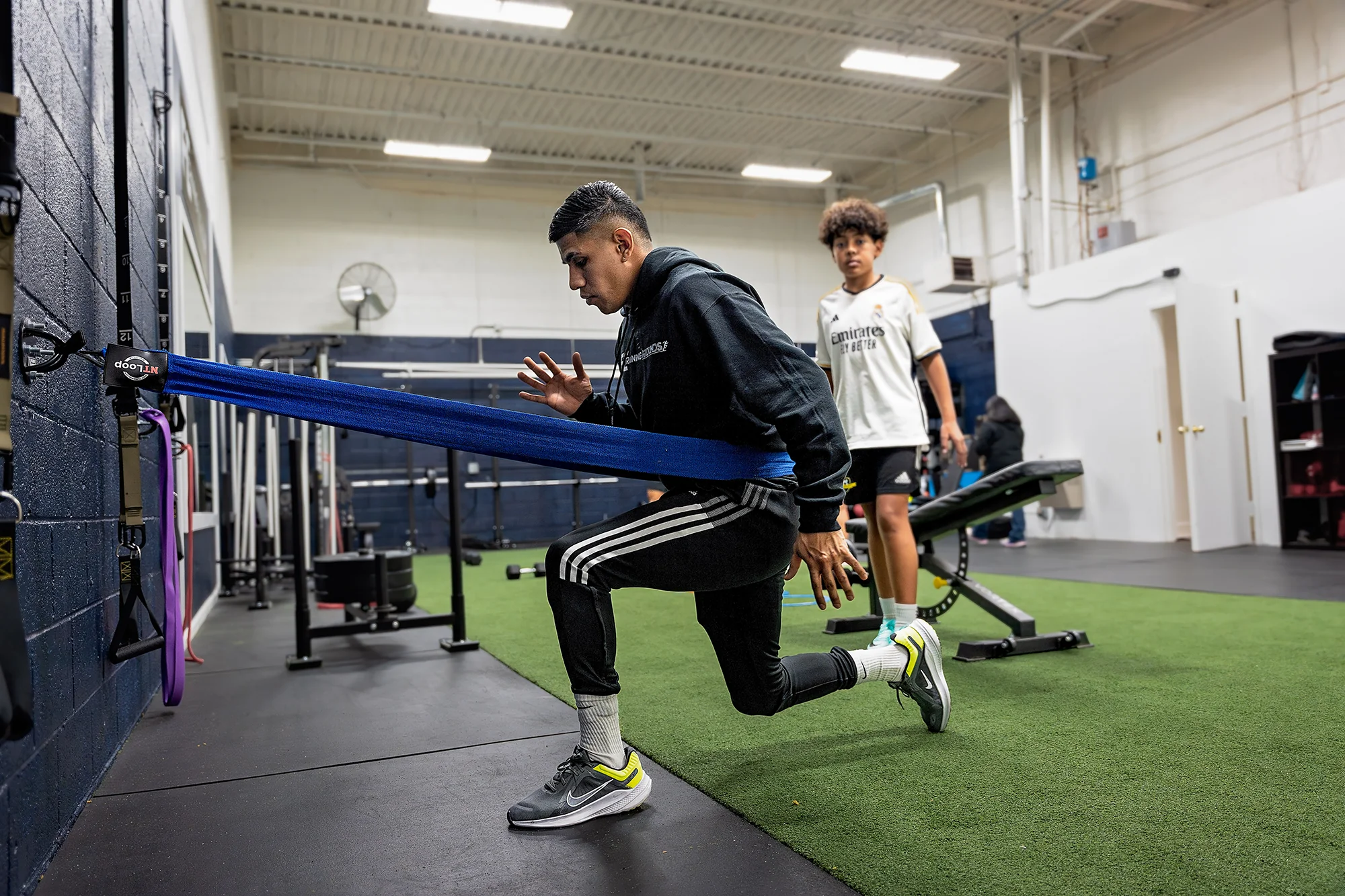
If you've ever been hurt playing a sport, you know the moment. The pain finally fades, you can jog without limping, and every part of you wants to get back on the field. For a lot of athletes, and a lot of parents, "it doesn't hurt anymore" feels like the green light.
It isn't. Pain is one of the least reliable signals that an athlete is ready to return. Some of the most common reinjuries we see happen to athletes who felt completely fine when they went back.
At Arizona Performance Institute, we work with athletes across Mesa, Gilbert, Chandler, Queen Creek, and San Tan Valley, from professional athletes to weekend pickleball competitors. Here's what we want every athlete to understand about getting back to sport the right way.
Pain usually drops off early in recovery. Once inflammation settles and the injured tissue is protected, day-to-day discomfort often goes away within a few weeks.
But pain going away tells you the tissue has calmed down. It doesn't tell you the tissue can handle the forces your sport demands. Sprinting, cutting, jumping, landing, and throwing put loads on your body that are far greater than walking around the house or doing a few light exercises.
Healing tissue also takes time to remodel and regain strength, often much longer than the pain lasts. Tendons, ligaments, and muscles need progressive loading to rebuild their capacity, and that process doesn't match up neatly with how you feel.
Even a few weeks away from sport creates gaps that don't always show up as pain:
Strength loss. The injured side often loses significant strength, especially in the muscles around the knee, hip, ankle, or shoulder. Athletes frequently compensate without realizing it.
Power and speed. Being strong enough to do a squat isn't the same as producing force quickly enough to explode off the line or change direction at full speed.
Balance and body awareness. After an injury, your sense of where a joint is in space often isn't as sharp. This is one reason a sprained ankle so often leads to another one.
Movement patterns. Athletes naturally protect an injured area, shifting weight away from it or changing how they land. Those habits can stick around long after the pain is gone and place extra stress on other joints.
Confidence. Hesitation on the field is real, and a hesitant athlete often moves in ways that increase injury risk.
Some of the best evidence on returning to sport comes from studies of athletes recovering from ACL reconstruction, one of the most common serious sports injuries.
Timing matters. In the Delaware-Oslo ACL Cohort Study, researchers followed 106 athletes in pivoting sports for two years. The reinjury rate dropped by 51% for each month return to sport was delayed, up to 9 months after surgery, with no further reduction after that point. Among athletes who failed the return-to-sport criteria, 38.2% suffered reinjuries, compared with 5.6% of those who passed (Grindem et al., 2016). Those criteria included quadriceps strength and hop test symmetry, with passing defined as scores above 90 on all tests. Simple decision rules can reduce reinjury risk by 84% after ACL reconstruction: the Delaware-Oslo ACL cohort study - PubMed +2
Objective testing matters. A study of 158 professional athletes at Aspetar in Qatar put players through isokinetic strength testing, a running agility test, and three different single-leg hop tests before return. Athletes who did not meet all six discharge criteria had roughly four times greater risk of ACL graft rupture than those who met them, and deficits in hamstring-to-quadriceps strength ratio were also linked to higher risk (Kyritsis et al., 2016). OffalyphysioandperformancelabPubMed
Young athletes face higher risk. A large systematic review found that athletes younger than 25 who return to sport have a secondary ACL injury rate of 23%, meaning nearly 1 in 4 young athletic patients who return to high-risk sport will go on to another ACL injury (Wiggins et al., 2016). PubMedPubMed
The mental side matters too. A meta-analysis of return-to-sport outcomes found that 81% of people returned to some form of sport after ACL reconstruction, but only 65% returned to their preinjury level and 55% returned to competitive sport. Symmetrical hopping performance and a positive psychological response were among the factors that favored returning to the preinjury level of sport (Ardern et al., 2014). PubMed CentralResearchGate
It's worth being honest that researchers are still refining which tests best predict a safe return, and not every study has found that passing return-to-sport criteria lowers reinjury risk. No single test is a guarantee. But the overall message is consistent: time alone isn't enough, and readiness should be measured, not guessed. ResearchGate
Rather than relying on how an athlete feels, a sports-focused physical therapist looks at objective markers. While every injury and sport is different, return-to-sport readiness typically includes:
Strength symmetry. Comparing the injured side to the uninjured side. A common benchmark, used in the Delaware-Oslo study, is for the injured limb to reach at least 90% of the healthy limb's strength.
Hop and jump testing. Single-leg hops for distance, triple hops, crossover hops, and timed hop tests show how well the limb absorbs and produces force.
Quality of movement. How an athlete lands, decelerates, and changes direction matters as much as how far or fast they go. Knees caving inward on landing, for example, is a red flag.
Sport-specific skills. A soccer player needs to cut and kick. A pitcher needs to throw at full velocity. A volleyball player needs to jump and land repeatedly. Rehab should end with drills that look like the actual sport.
Tolerance to load over time. Can the athlete handle a full practice, then another one the next day, without swelling, soreness, or pain creeping back?
Psychological readiness. Does the athlete trust the injured area? Fear of reinjury is a legitimate factor, and it improves with a structured, progressive return.
Many rehab programs do a good job getting patients out of pain and back to normal daily function. That's an important goal, but it's not the finish line for an athlete.
The gap between "I can walk and do stairs normally" and "I can play a full game at full speed" is where a lot of athletes get lost. They're discharged, they feel fine, and they head back to practice without the final stage of rehab that bridges daily function and sport performance.
That final stage is where sports physical therapy makes the biggest difference. It includes plyometrics, agility work, sprint progressions, sport-specific drilling, and objective testing that tells you when the athlete is truly ready.
Young athletes are especially eager to get back, and coaches, teammates, and tournament schedules can add pressure. It's completely understandable. But as the research above shows, younger athletes returning to high-demand sports are among the highest-risk groups for reinjury.
If your child says "it doesn't hurt anymore," that's a great sign of progress. It's also the right time to ask, "How do we know they're ready?" A clear, measured return plan protects both their season and their long-term athletic development.
At Arizona Performance Institute, our sports physical therapy team focuses on getting athletes all the way back, not just out of pain. That means:
Our goal is simple: return to sport stronger, more confident, and less likely to get hurt again.
Whether you're recovering from an ACL tear, an ankle sprain, a shoulder injury, or a lingering hamstring strain, we can help you figure out what "ready" looks like for you. Arizona allows direct access to physical therapy, so you can book an evaluation without a physician referral.
Schedule your sports physical therapy evaluation at our Mesa clinic today.


%402x.svg)


%402x.svg)